Dinner Ideas for Picky Eaters: One Meal, Parts Apart
Published 2026-10-16 · Updated 2026-10-16
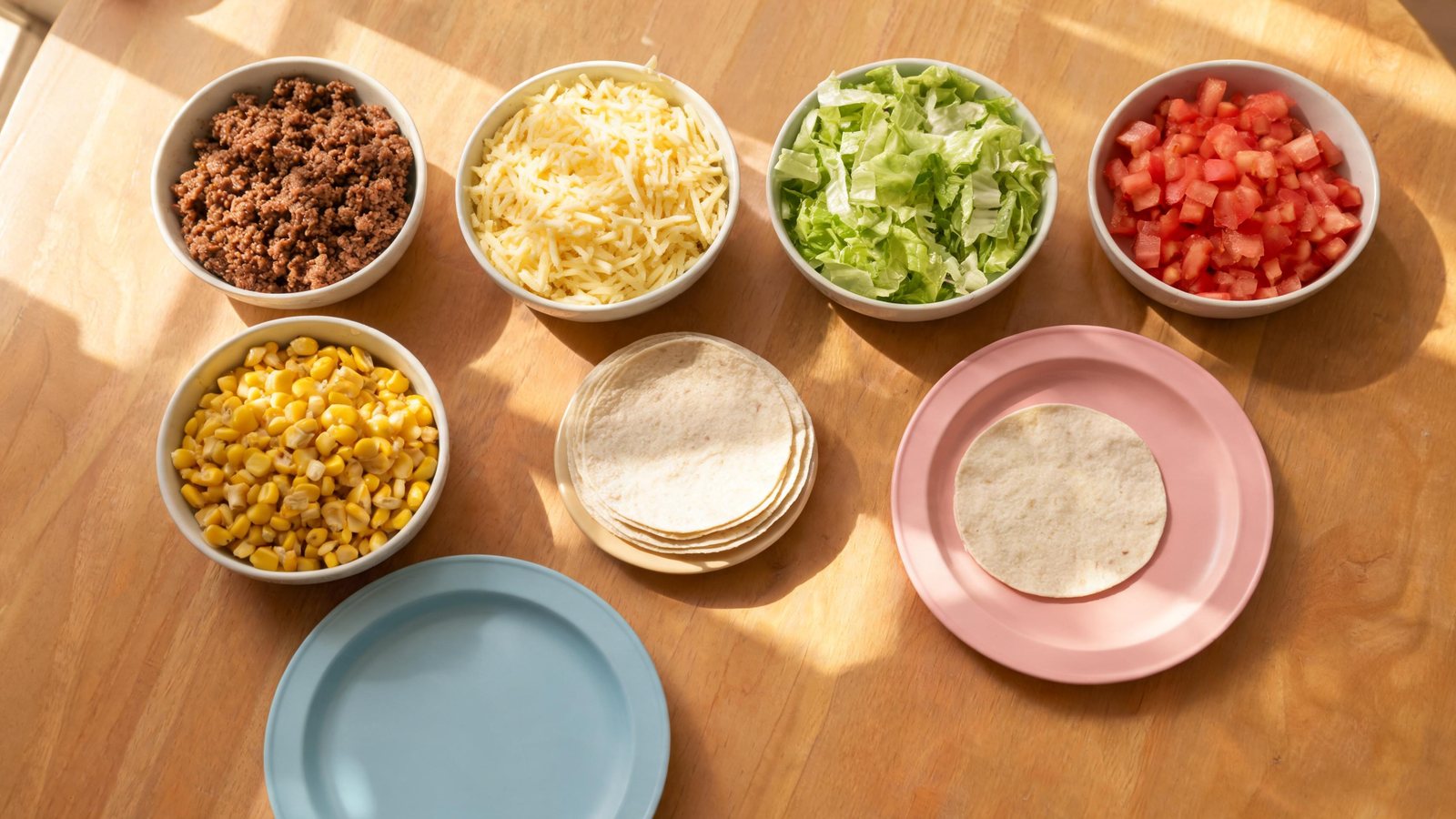
Serve one dinner, in parts, and let each person build a plate from those parts. That is the useful answer to dinner ideas for picky eaters: not a second menu, and not a hope that a mixed dish will be accepted on the first night.
Four formats cover most weeknights:
- Taco or rice bar: meat or beans, cheese, lettuce, tomato, corn, and tortillas or rice, each in its own bowl. A plain tortilla or plain rice stays on the table as the food someone already eats.
- Deconstructed pasta: noodles in one bowl, sauce in another, a vegetable in a third. The same sauce the rest of the table puts on the noodles can sit beside a plain bowl of noodles.
- Dip plate: a familiar dip in the center, and small pieces of other foods around it, not stirred in.
- Baked-potato bar: potatoes, then toppings in bowls. A plain potato is a complete plate if that is all that gets eaten.
Pick one format for tonight. Write the liked food and the optional bowls before you shop. The feeding pages below are the reason the parts stay apart, and the reason you still cook only once.
Four ways to serve one dinner in parts
A build-your-own bar is one protein, one starch, and a few bowls. Tacos, rice bowls, and baked potatoes are the same shape. You cook the protein once. You do not invent a separate entrée. The person who wants everything mixed builds that plate. The person who wants the starch plain takes the starch. Both plates came from the same pots.
Deconstructed pasta is the mixed dish pulled apart, not a different dish. Spaghetti and meat sauce, macaroni and a tomato sauce, or noodles and a vegetable. If the sauce stays in its own bowl, a plain noodle plate and a fully dressed plate are the same dinner. This is the swap: the component moves from "mixed in" to "on the side," and the shopping list does not gain a second protein.
A dip plate uses a food that is already accepted as the bridge to the others. The dip is the anchor. Pieces of bread, potato, or a mild vegetable sit beside it. Nobody has to eat a casserole to be at the same table.
Breakfast-for-dinner fits the same rule when the accepted foods are eggs, toast, or fruit. Keep them in separate piles. It is still one sitting, not a kids' menu plus an adult menu.
The week those formats sit inside is on the family dinner ideas page. This page is only the one-meal shape.
The swap, written before you cook
Write three lines before you start, on paper or on the grocery list:
- Anchor: the food someone at the table already accepts. It is on the table every time you serve this format. A plain starch, cheese, bread, or fruit can be the anchor. It is part of the family meal, not a second meal you cook after a refusal.
- Shared parts: the protein, the sauce, the vegetable. Cooked once, held in bowls.
- New or often-refused part: one item beside the anchor, not hidden in the sauce. Offer it again on a later night. Do not replace the dinner when it is left in the bowl.
That is the swap logic. The anchor stays. The shared parts stay. The new part is optional and separate. You change which bowl a food sits in. You do not change the menu into two menus.
Shop from those three lines. The anchor and the shared parts are the list. A second protein "just in case" is how a second dinner sneaks into the cart. Leave it off unless the household already planned to eat that protein another night.
What the feeding pages actually assign
Two public pages describe the job. They do not give the same count, so both are here.
The American Academy of Pediatrics tips for parents of picky eaters say to serve one meal for the whole family and to resist making another meal if a child refuses what was served. They also say to include at least one food the child likes with each meal. Providing the food is the parent's responsibility, and eating it is the child's decision, on that same page.
The CDC picky-eater page says not wanting foods to touch each other on the plate is a common behavior, and it tells you to give a choice of foods and let the child decide which one to try that day. Separate bowls are the practical form of that note: the foods can be chosen without being stacked.
On how often to offer a new food, the pages diverge. The CDC page says it may take 8 to 10 exposures before a young child is willing to try a new food. The AAP tips say it can take 10 or more times tasting a food before a toddler accepts it. Use the wider reading: keep the new food in the optional bowl across many meals, and do not treat a first refusal as a verdict. This page does not turn those counts into a promise that a food will be accepted.
A dip is one way in that the AAP tips mention: toddlers often enjoy a food that involves a dip. That is a format note, not a reason to add a second cooked entrée.
The limit of this advice is the decision line those pages already draw. Parts in separate bowls still leave eating to the person at the plate. A refused food can stay refused. You still offered one meal.
A gallery of recipes is not the swap
The first two recipe galleries in the top results returned a challenge page, so they are not used here. The middle result is a video, and it was not opened.
That other page lists 22 family meals and has no build-your-own layout or one-meal rule. It is a Taste.com.au gallery, updated in 2019, of single recipes such as pies, bakes, and macaroni. A recipe gallery is stronger when you already want a mixed dish and a full ingredient list. It is weaker when the problem is two menus. The missing piece is the written swap: anchor, shared parts, optional bowl.
If you want the dinners already printed
The formats above work with a blank sheet. If you want the dinners and the shop written out, the 12-Week Family Dinner Plan includes 60 original family dinner recipes, each with swaps, a leftovers note and a fridge line, plus 12 grocery lists sorted by aisle. It prints as 90 pages, US Letter and A4 together in one ZIP, for $11.00. It gives no nutrition figures and no diet, health or allergy advice; swaps are everyday preferences.
Those swaps are ingredient preferences on a recipe card. They are not a feeding plan, and they are not a promise about what a child will eat.
A taco bar on paper (illustrative)
This Wednesday is an example of the three lines, not a tested recipe and not a feeding outcome.
- Anchor: plain tortillas and a bowl of shredded cheese. Both are foods this example's table already eats.
- Shared parts: seasoned ground meat, lettuce, tomato, corn, rice in a separate pot.
- Optional bowl: a spoon of salsa, set beside the meat, not stirred in.
One person builds a full taco. Another eats a tortilla and cheese, with rice. The meat is on the table either way. The shop list is meat, cheese, tortillas, lettuce, tomato, corn, rice, salsa. There is no second protein. If the salsa comes back untouched, it returns next week in the same optional bowl. That repeat is the exposure. The example does not say the salsa will be eaten.
Questions
What are good dinners for picky eaters?
One household meal with the parts in separate bowls: a taco bar, deconstructed pasta, a dip plate, or a baked-potato bar. Put one food the child already accepts on the table with the rest. Do the cooking once.
How many times should a new food be offered?
The counts differ by page. The CDC picky-eater page says 8 to 10 exposures before a young child may try a new food. The American Academy of Pediatrics tips say 10 or more tastes before a toddler accepts a food. Keep offering the food beside one the child already eats, and read both pages rather than averaging them.