How to Make a Grocery List That Gets You Through the Store
Published 2026-10-16 · Updated 2026-10-16
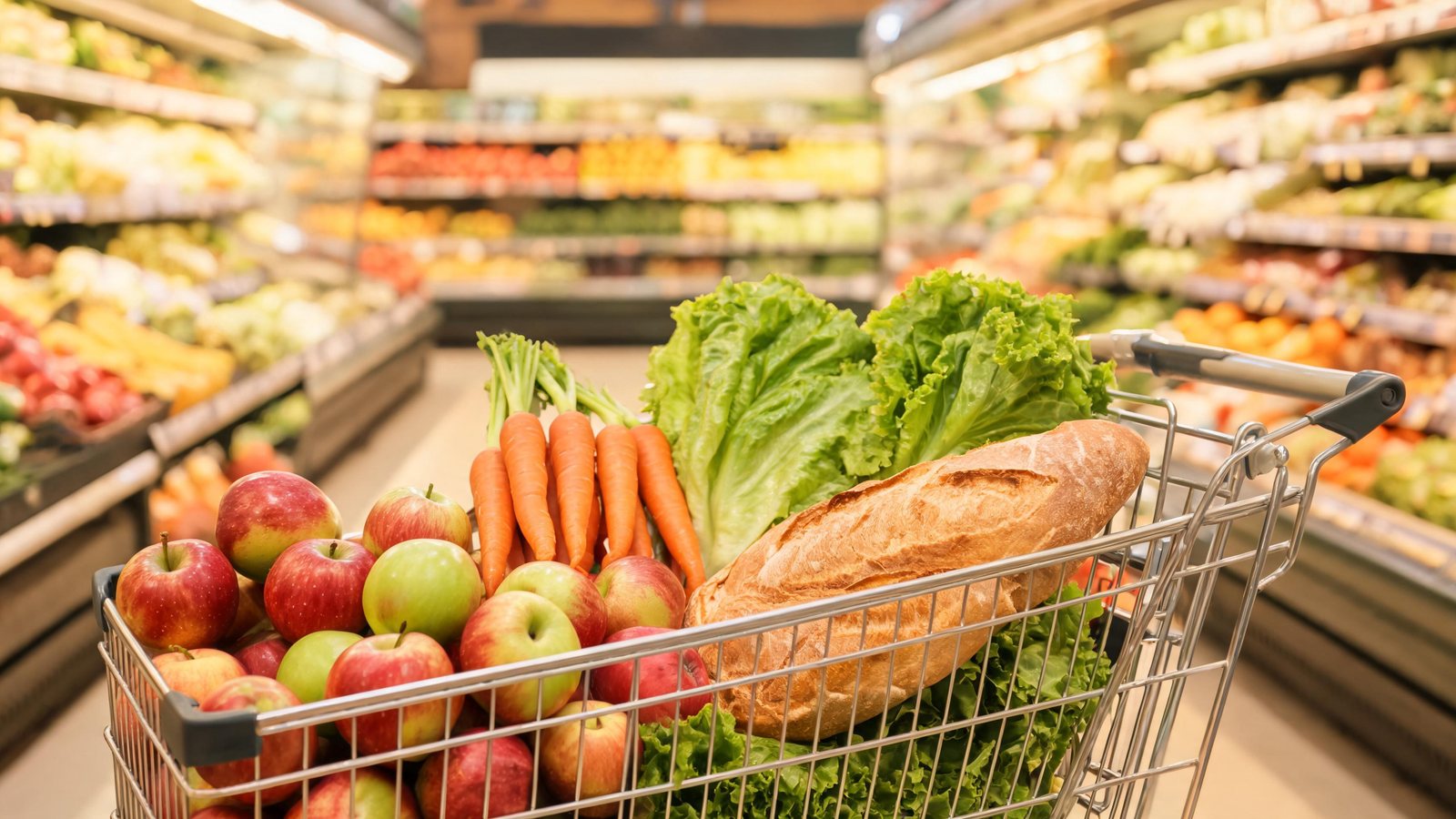
A grocery list that gets you through the store is written in walk order, with an amount on each fresh line and a mark for what the kitchen already holds. Before you leave, write the dinners you will cook, note what you already have, put a quantity beside each fresh item, and sort the rest into the aisle order below. Then walk that order once.
This is a starter, not a map of your store. Copy it, then change any heading that does not match the signs in the store you actually use.
| Order | Aisle | What belongs on the lines |
|---|---|---|
| 1 | Produce | Vegetables, fruit, fresh herbs, salad greens |
| 2 | Bakery | Bread, rolls, tortillas |
| 3 | Deli | Sliced meat or a prepared side you already planned |
| 4 | Meat and seafood | Chicken, beef, pork, fish, sausage |
| 5 | Dairy and eggs | Milk, cheese, yogurt, eggs, butter |
| 6 | Frozen | Vegetables, fruit, and bread you buy frozen |
| 7 | Canned and jarred | Tomatoes, beans, broth, sauce, fish in a can |
| 8 | Dry goods | Pasta, rice, cereal, oats |
| 9 | Baking and spices | Flour, oil, and the spice you are out of |
| 10 | Snacks and breakfast | Only the items you wrote down |
| 11 | Household | Paper, soap, bags, filters |
On each line, write three things: the item, the amount you still need, and whether the kitchen already has it. That item-and-amount layout is the EPA shopping sheet. The EPA shopping sheet has no aisle heading, so you add one and the lines sit in the order you will walk.
Dinners before the list
A list with no dinners behind it is a memory test. Decide which meals you will eat at home before the next trip, which is the first prompt on the EPA shopping sheet, dated February 2016. Count the home meals, including lunches you pack, not only dinners.
The Utah State University Extension weekly menu planner starts the same way in practice: check what foods you have on hand, note what is on sale that week, consider the week's schedule, and plan leftovers. If planning a full day is new, the handout says to plan dinner or lunch only. That is enough to build a list.
Write the dinners in a short row, one line each. A method for filling that row sits in how to make a meal plan. If the week is blank, pull a few dinners from family dinner ideas and stop when the days you will cook are covered. You do not need a clever menu. You need a menu you will actually cook before the food spoils.
Then list ingredients under those dinners. Combine repeats. Two dinners that both use an onion become one onion line, with a count, not two separate onion lines that you will buy twice.
The kitchen check
Shop the kitchen before you shop the store. The EPA sheet tells you to note items you already have, and its sample columns are the food item, the amount needed, and what you already have. Open the pantry, the fridge, and the freezer with the ingredient list in your hand. Cross off rice, pasta, oil, and spices that are still there. Write "have it" beside a partial jar so you do not buy a second one.
The Utah State planner puts that check first, together with what is on sale. Sale prices are a reason to swap a dinner, not a reason to add a food you have no meal for. If chicken is the sale and you were going to buy beef, change the dinner, then change the list.
A kitchen you cannot see will defeat this step. If jars are stacked so the back row is a guess, set that up once using pantry organization ideas, then come back to the list. The list itself cannot find a can you cannot see.
The Nebraska Extension grocery-list article has no pantry check. It is strong on grouping and on a reusable master list. Open the cupboards before you write amounts anyway. That step is the difference between a list of wishes and a list of gaps.
Amounts, not just names
Beside each fresh item, write the quantity you need or the number of meals that item has to cover. That is the second prompt on the EPA sheet. "Peppers" becomes "three peppers" or "peppers for two dinners." "Milk" becomes "one gallon" if that is what the week uses. A name with no amount is how you come home with too little for Thursday and a spare you will not cook.
When you want to choose the cut in the store, write the count instead of the cut. Nebraska Extension uses the example of writing "7 meats" when the week needs meat for 7 meals. You still decide at the case. The list has already told you how many meals that case has to feed.
The Utah State grocery-list page sorts boxes into produce, canned goods, meat, dairy, frozen foods, bakery, and household, and it has no amount column. Use the boxes as headings if you like them. Add the amount yourself. A heading without an amount still lets you forget how many.
If another person will shop, write the brand and the size on the line. Nebraska Extension recommends that so the shopper is not guessing between cans. "Diced tomatoes, the usual can size, the brand we usually buy" is a line someone else can fill. "Tomatoes" is not.
Sort into one pass
Grouping similar items is what keeps you from walking back. Nebraska Extension says grouping foods by category helps you remember them and makes a return trip less likely, and that grouping also makes you less likely to double back for something you missed in a section you already left.
Two kinds of headings exist, and they do different jobs. Food-group headings (grains, vegetables, fruit, milk, protein) show whether the week is lopsided. Store headings (canned goods, frozen foods, fresh produce) match the walk. Nebraska Extension describes both. For a fast trip, use the store headings. Build them by walking your store and copying the signs in each aisle, or by using the store's map if it publishes one. The table at the top is only a stand-in until you have done that walk.
Stores move products. A store-order list suits a household that shops mainly at one store, which is the caution Nebraska Extension gives. If you rotate among three stores, keep one heading set per store, or the list will fight the floor. After a reset of the aisles, walk once with a pencil and fix the headings. That walk is shorter than a season of doubling back.
Add a catch-all for condiments and staples, and add household lines. Nebraska Extension puts toothpaste, laundry soap, and coffee filters on the same master list as food, because those are the items that force a second stop when they run out. Put them in the last aisle group so you pick them up on the way to the checkout, not in the middle of produce.
A master list you reuse is faster than a blank page each week. Leave space under each heading. Write the foods you buy almost every week under the heading, and circle the ones this week needs. Nebraska Extension uses carrots under vegetables as that kind of standing line. The circle is the decision. The word was already there.
How to break a grocery list down
The question "how do I break down a grocery list?" is this sequence, in order:
- Name the meals you will cook before the next shop.
- List every ingredient those meals use, then merge repeats.
- Cross off what the pantry, fridge, and freezer already hold.
- Move each remaining line under the aisle where you will pick it up.
- Write an amount, or a meal count, on each fresh line.
- Add household lines you will run out of before the next trip.
- Put the list where the household can add to it, and take it with you.
Step 4 is where a long list becomes a walk. A single column of forty mixed lines is still a scavenger hunt. The same lines under eleven headings are a route. For the foods that belong under those headings week after week, use grocery list ideas as the standing stock, then delete anything this week's dinners do not need.
Keep the list in one place the household shares: the fridge, a drawer with a pencil, or a photo of the paper on your phone before you leave. Nebraska Extension suggests all three, and notes that a phone app can share a list across people. Try a free app before you pay for one. An app does not replace the kitchen check or the amounts. It only holds the lines.
A sample week (illustrative)
These dinners and amounts are invented so the method is visible. They are not a menu to copy for nutrition, cost, or a promised shop length.
Suppose the household will cook five dinners before the next trip: chicken tacos, lentil soup, pasta with jarred sauce, sheet-pan sausage with vegetables, and fried rice. The kitchen already has rice, dried lentils, pasta, and two cans of tomatoes. The fridge has half a jar of salsa.
The ingredient list starts long. The kitchen check cuts it. Rice, lentils, pasta, and canned tomatoes come off. Salsa stays off because half a jar covers the tacos. What remains is the buy list:
- Produce: one onion, two peppers, a small lettuce, a lime.
- Bakery: one pack of tortillas.
- Meat: chicken for one dinner, sausage for one dinner.
- Dairy and eggs: a small cheese, four eggs.
- Frozen: one bag of mixed vegetables for the fried rice.
- Canned and jarred: one carton of broth for the soup and one jar of pasta sauce for the pasta night.
- Household: nothing this week.
The walk follows the table. Produce first, bakery, meat, dairy, frozen, then the broth in the canned aisle. Dry goods are skipped because the kitchen check cleared them. The fried rice uses the rice already on the shelf, the eggs, and the frozen vegetables. The soup uses the lentils already on the shelf, the onion, and the broth. Nothing in this example supports a claim about the bill or the minutes in the store. It only shows that a kitchen check changes the list, and that aisle order keeps the remaining lines in one direction.
In the store
Take the list. Stick to the lines. A sale on a food you have no meal for goes back on the shelf, unless you are willing to change a dinner on the spot and add only what that dinner needs. Utah State asks you to notice what is on sale while you plan, which is the right moment. The aisle is the wrong moment to invent a sixth dinner.
If you are still choosing fruit or the meat cut, the count on the line is the guardrail. Nebraska Extension allows that choice at the case, as long as the number of items is already written. "Fruit for five breakfasts" is a line. "Fruit" is a wander.
When you finish an aisle, look at that heading only. If every line under it is marked, leave the aisle. Going back is the cost the grouping was meant to avoid.
A printed page for the same job
The method above works on any paper. If you want the headings and the pantry column ruled for you, the Printable Kitchen Planner Toolkit includes an aisle grocery list (11 aisles) with pantry check, a weekly planner and grocery list, and a pantry inventory. It is 20 pages. It is a print-only PDF: you print the pages and write on them by hand. It is blank planning pages: no recipes or ready-made dinners are included. It comes as separate US Letter and A4 PDFs in one ZIP. The Printable Kitchen Planner Toolkit is $7.00.
You still write the dinners, the amounts, and the circles. The pages do not know what your store charges or what your kitchen holds.
The limit of a copied order
The aisle table will be wrong in places for your store. Nebraska Extension says stores change where they place foods, and that a store-order list suits someone who shops mainly at one store. Walk that store, copy the signs, and replace any heading here that sits in a different place on that floor. Until you do, expect one or two doubles back. The kitchen check and the amounts still hold. The headings are the part you have to make local.
Questions
How do I break down a grocery list?
Start from the dinners you will cook, list the ingredients, cross off what the kitchen already has, split what is left by aisle, and put an amount on each fresh line. The amount column is the layout on the EPA shopping sheet.
Should a grocery list follow food groups or the store?
Use food-group headings when you want to see vegetables, grains, and protein on the week. Use store headings when the job is a fast walk. Nebraska Extension describes both, and says a store-order list suits a household that shops mainly at one store because stores move products.
What should I write if someone else is shopping?
Write the brand and the can size on the line. Nebraska Extension recommends that when another person is buying, so the shopper can match the shelf.
Do I need an app to keep a grocery list?
A paper list in a place the household can reach, plus a photo of it on your phone, is enough. Nebraska Extension also notes that phone apps can share a list, and suggests trying free ones before you pay.