Pantry Organization Ideas So You Can See What You Have
Published 2026-10-16 · Updated 2026-10-16
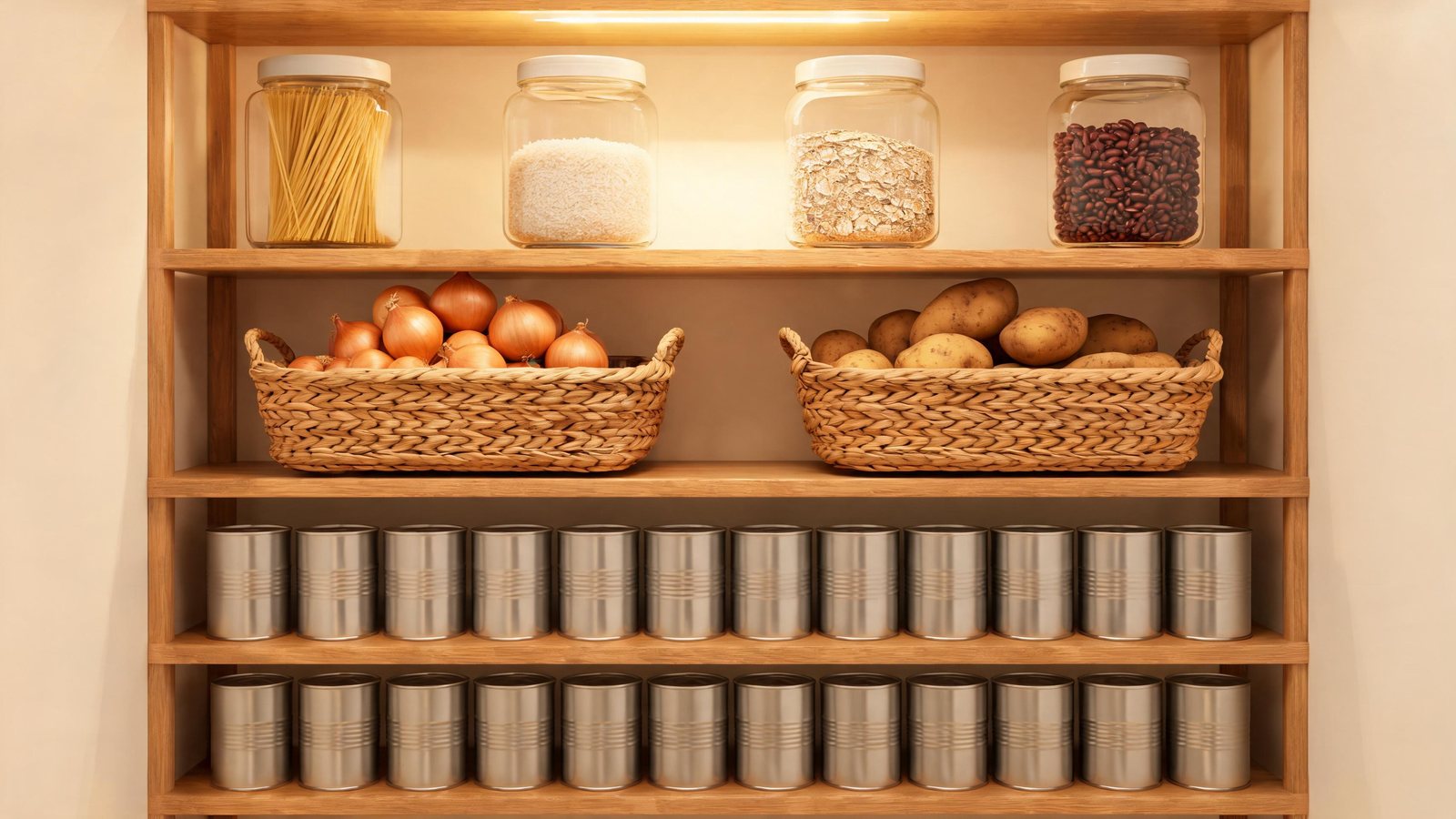
Organize the pantry so a glance answers two questions: what can stay on the shelf, and what you still need to buy. Group shelf-stable food into dinner-job zones you can see, keep those zones cool and dry, and walk them before you shop. The low lines become the grocery list.
The three top results for this search came back as bot walls or a redirect limit, so they were not used. The rules below come from USDA and FoodSafety.gov, not from those shop pages.
Seven dinner-job zones
No page opened for this article defines a federal set of seven pantry zones. The USDA FSIS shelf-stable page has no inventory sheet. The zones below are a dinner-job order, so the shelf matches how you cook.
- Dinner starters. Broth, canned tomatoes, beans, and pasta sauce. These are the cans a weeknight opens. Put them at eye level.
- Starches. Pasta, rice, and oats, in clear jars so the level shows. The bag the jar was filled from sits behind it.
- Breakfast. Cereal and pancake mix, off the dinner shelf, so a morning search does not bury the broth.
- Baking and spices. Flour, sugar, salt, black pepper, and garlic. A spice you cannot see is a spice you will buy twice.
- Oils and condiments. Oil, vinegar, ketchup, and mustard, together, so a dinner that needs one of them does not become a shelf hunt.
- Snacks. One box the household can see. A snack buried behind cans gets stale while someone buys another box.
- Bulk behind the jar. The large bag stays behind the container you cook from. When the front container is low, that food goes on the list, even if a backup bag remains.
Swap a zone if your household cooks differently. A family that bakes on Sundays may want baking at eye level and snacks higher. The point is the job, not a catalog photo. Foods that belong in these zones as standing stock are listed in grocery list ideas.
What can stay on the shelf
USDA FSIS calls foods that can be stored at room temperature shelf stable. That list includes jerky, country hams, canned and bottled foods, rice, pasta, flour, sugar, spices, oils, and other products that do not need refrigeration until after opening. Those are the foods the zones are for.
Not every can is in that group. Some canned ham and seafood are labeled "Keep Refrigerated" and are not safe at room temperature, which USDA FSIS states directly. Read the label before a can goes on the dry shelf. A keep-refrigerated ham is a fridge item, whatever the zone chart says.
Shelf-stable canned hams are a special case, and the two federal pages do not give the same time. USDA FSIS says some shelf-stable canned hams, generally not over 3 pounds, can be stored in the pantry 2 to 5 years at room temperature. The FoodSafety.gov cold storage chart, last reviewed September 19, 2023, notes that an unopened, shelf-stable canned ham can be stored at room temperature for 2 years. Use the shorter figure if you want one number to plan around, and keep the label. This article does not blend the two into a new limit.
Store the cans in a cool, dry place. USDA FSIS says to keep them off the area above or beside the stove, out from under the sink, and out of a damp garage or basement, and away from high or low temperature extremes. It names temperatures below 85 degrees F as the storage target. A pantry over the radiator, or a cabinet that heats when the oven runs, fails that test even if the jars look tidy.
What does not belong there
Raw eggs in the shell are a refrigerator food: 3 to 5 weeks on the FoodSafety.gov cold storage chart. A pantry zone is the wrong place for them.
Cooked meat or poultry leftovers are a refrigerator food: 3 to 4 days on that same FoodSafety.gov chart. The full leftover chart is in how long leftovers are good for. A pantry shelf is the wrong place for a container of last night's roast, however well labeled.
Once canned food is opened, USDA FSIS says unused portions must be refrigerated in clean containers. The agency also says you may refrigerate the unused food in the can, and that a glass or plastic container holds quality better. Either way it leaves the dry shelf. Opened shelf-stable canned ham is 3 to 4 days in the refrigerator on the FoodSafety.gov chart. That time is for that ham, not a guess for every opened can. Other opened foods take the time on their own row of the chart.
The refrigerator on that chart is 40°F or below. A "cool pantry" is not a substitute for that setting. The FoodSafety.gov chart has no pantry section. Its times are fridge and freezer times. Freezer guidelines on the chart are for quality; food held continuously at 0°F or below can be kept indefinitely. That sentence is about the freezer, not a reason to park meat on a shelf.
Leave bulging, rusted, leaking, and deeply dented cans at the store. USDA FSIS says not to purchase them. A zone label does not repair a bad can.
A check that feeds the grocery list
USDA FSIS says to check the pantry every few weeks and use canned goods you have had on hand for a while. That is the safety reason for a visible shelf. The shopping reason is the same walk.
On the morning you shop, go zone by zone. For each front jar or front can, decide if it will last until the next trip. If it will not, write the item on the grocery list. If a backup bag is behind the jar, you still write the item when the front container is the one you cook from and it is low. The backup is not a reason to skip the line. It is a reason to refill the jar after you shop, and to put the older can in front when a new one arrives, so the "had on hand for a while" check is a glance.
Amounts and aisle order for that list are in how to make a grocery list. The zones tell you the gap. The list tells you the walk.
A card on the inside of the door can hold the seven zone names and a pencil mark for "low." Replace the card when it fills. The mark is the inventory. You do not need an app for a cupboard you can see.
Cans you can see
Face labels forward. One row deep beats a stack you have to unpile. If a shelf is too deep, a lazy Susan or a bin that pulls out is useful only if you still see the front. A bin with a lid you never open is a second pantry you will forget.
Decant dry goods into clear jars if the bag hides the level. Keep the original bag's date or a written open-date on the jar. The jar is for seeing. The date is for the every-few-weeks check. When you add a new can of tomatoes, slide the older can to the front of the dinner-starter zone. That is the whole rotation. It takes less time than a seasonal purge, and the purge still happens when the few-weeks check finds a can you do not recognize.
A page for the same marks
Paper is enough. If you want the inventory rows printed, the Printable Kitchen Planner Toolkit includes a pantry inventory and an aisle grocery list (11 aisles) with pantry check. It is a print-only PDF in US Letter and A4. It is blank planning pages, so recipes are not included. Pencil the zone names onto the inventory after you print. The Printable Kitchen Planner Toolkit sells for $7.00.
The pages do not know which can is older. You still walk the shelf.
The limit of a tidy shelf
A zone system shows what you have. It does not make a bulging can usable, and it does not turn a keep-refrigerated label into a dry-shelf food. When the label and the shelf disagree, follow the label and the federal pages linked above. The honest limit of this layout is that it organizes food. It does not inspect it.
Questions
What are the seven pantry zones?
There is no federal list of seven zones on the pages opened for this article. The seven dinner-job zones here are starters, starches, breakfast, baking, oils and condiments, snacks, and bulk behind the jar you cook from.
What should I not store in the pantry?
Cans labeled keep refrigerated are not safe at room temperature, including some canned ham and seafood, which USDA FSIS states. Raw eggs in the shell are a refrigerator food for 3 to 5 weeks, and cooked meat leftovers for 3 to 4 days, on the FoodSafety.gov chart.
How often should I check the pantry?
USDA FSIS says to check the pantry every few weeks and use canned goods you have had on hand for a while. If you shop on a set day, walk the zones that morning and move the low lines onto the list.
Where should canned food sit?
In a cool, dry place. USDA FSIS says to keep cans off the area above or beside the stove, out from under the sink, and out of a damp garage or basement, and names temperatures below 85 degrees F as the storage target.