Slow Cooker Meal Prep: Thaw First
Published 2026-10-16 · Updated 2026-10-16
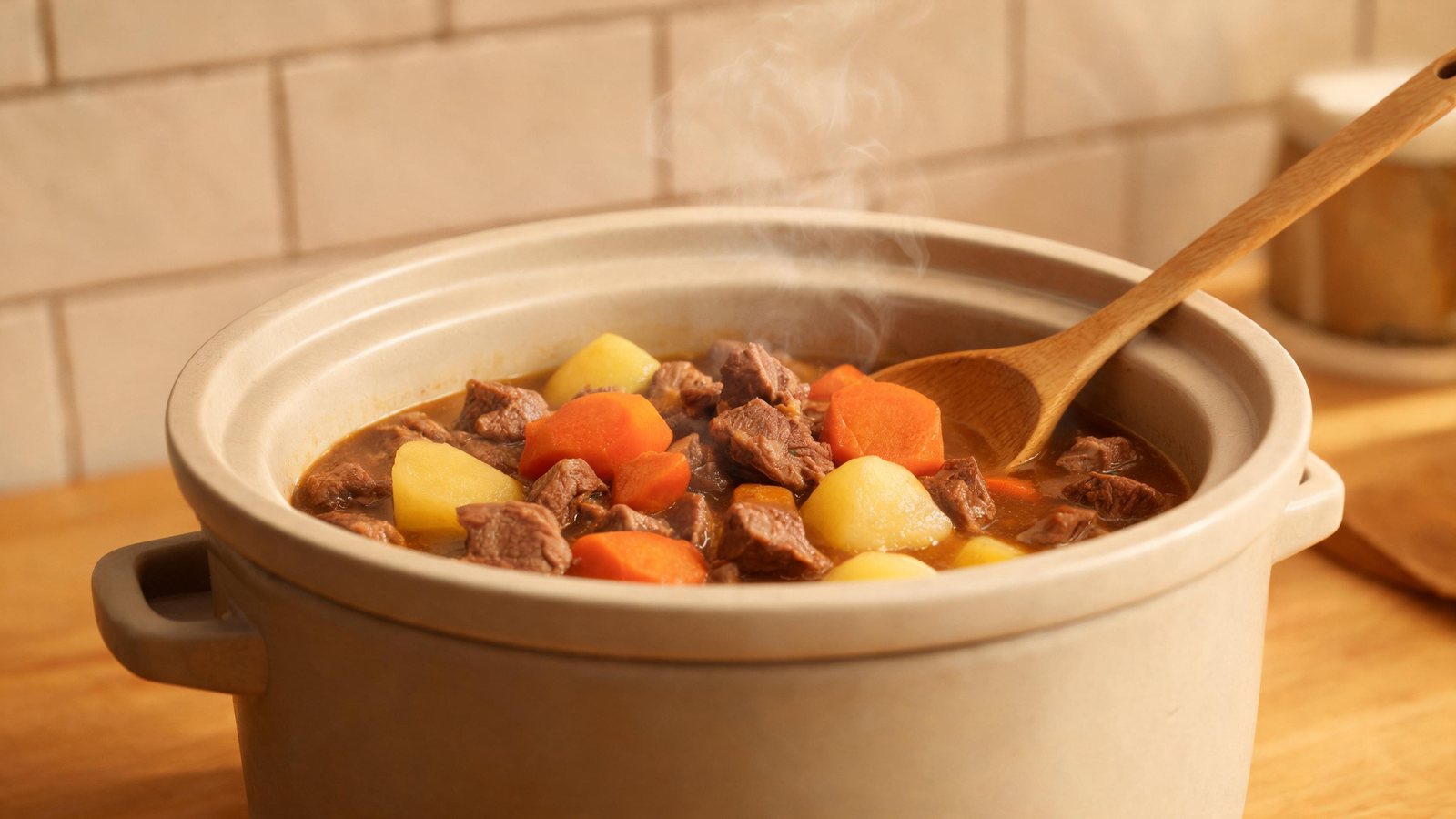
Thaw meat and poultry before it goes into a slow cooker. The USDA slow cooker page says to always thaw meat or poultry first. A commercial frozen slow cooker meal is the exception, and only if you follow the package instructions. A prep-ahead bag still fits that rule: assemble, freeze if you need a later week, move the bag to the refrigerator to thaw, and only then pour it into the cooker.
Thaw before the cooker
A slow cooker heats slowly. The USDA page says it may take several hours to reach a bacteria-killing temperature, so perishable food stays in the refrigerator until you are ready to start. If you cut meat and vegetables ahead of time, store them separately in the refrigerator. That keeps bacteria from getting a head start during the first hours of cooking.
The cooker itself runs low. The same page says a slow cooker generally cooks between 170°F and 280°F. That range is the appliance, not a target you skip a thermometer for. When the food is done, leftovers are a different temperature: reheat to 165°F, then hold at 140°F or hotter if the food goes back into a preheated cooker to stay hot for serving.
Raw thawed meat is an ordinary slow-cooker ingredient. Frozen meat is the ingredient the thaw-first line keeps out. Vegetables go in first, because they cook slower than meat and poultry in this pot. Then add the meat and the liquid the recipe calls for, such as broth, water, or barbecue sauce. Keep the lid on, and lift it only to stir or to check doneness.
High-moisture dishes are the ones the page points to: chili, soup, stew, or spaghetti sauce. A dry roast with no liquid is outside that suggestion.
A bag method that follows that rule
Use the bag for a later week, not as a way to skip the thaw.
On prep day, portion thawed meat, vegetables, and sauce into a freezer bag if the meal is for a later week. The meat is thawed before it is bagged. Freeze the bag the same day, in a single layer until it is solid, then stack it. The night before you cook, move the bag to the refrigerator so it thaws there, not on the counter. In the morning, put vegetables in the cooker first, add the thawed meat and the liquid, and turn the cooker on. That order is the USDA thaw-first line plus the vegetable-first line, applied to a bag.
A bag that is still frozen at breakfast is not ready. Give it a refrigerator thaw, or cook a fridge meal instead. The commercial-meal exception is a package with its own instructions, not a homemade bag.
The printable from the second result already uses the overnight fridge step. Its recipes say to move the frozen bag to the refrigerator the night before, then pour it into the cooker in the morning. That step follows the USDA rule. The printable omits a 165°F reheat and the line that reheating leftovers in the slow cooker is not recommended.
Write the meal name and the cook date on the bag when you freeze it. The night before, the only decision is which labeled bag moves to the refrigerator. In the morning the vegetables go in first, the thawed meat and liquid follow, and the lid stays down. That is the whole handoff from freezer to pot. A second bag for the next night stays frozen until its own thaw night, so you are not thawing the week's meat on one counter.
Morning settings and the lid
Most cookers have a low setting and a high setting. Food cooks faster on high. The USDA slow cooker page says you can turn the cooker to the highest setting for the first hour, then to low, and it also says cooking on low the entire time is safe when you are leaving for work. Keep the lid on while it runs. Food stays safe while the cooker is operating.
If the power goes out and you are not home, the page says to throw the food away even if it looks done. If you are home and the food was fully cooked before the outage, it should remain safe up to two hours in the cooker with the power off. Finish a half-cooked pot by another method if you are there to do it: a stove, a grill, or another kitchen with power.
Leftovers after the cooker
When the cooker finishes, move leftovers into shallow covered containers and refrigerate them within two hours. Reheating those leftovers in the slow cooker is not recommended. Heat them on the stove, in a microwave, or in an oven to 165°F, then use a preheated cooker only to hold the hot food at 140°F or above.
Fridge time after that is the leftover chart, in how long leftovers are good for. A freezer session that is not a slow cooker is in freezer meal prep.
What the recipe pages add
The top result is a Facebook video. The capture was a bot-check page, so the video was not opened and is not a source.
Thirty Handmade Days is a list of crockpot freezer meals and a printable of recipes and a grocery list. The printable's cook steps include the overnight refrigerator thaw. Use that thaw. Add the USDA reheat and leftover lines the printable leaves off. The Crumbs slow cooker plan is one week of slow cooker dinners and states a grocery range of about $50 to $75 for those dinners. The Crumbs slow cooker plan omits a thaw-first rule and a 165°F reheat.
A bag you freeze is still a freezer meal. Types that freeze poorly, and the quality months, are in freezer meals.
A week of slow cooker dinners can still be planned on one prep afternoon. Bag the later nights, thaw each bag the night before its cook day, and keep the lid on in the morning. The dinners you will eat from the fridge instead of the cooker follow the leftover chart, not this pot. Mixing the two is fine if each portion has the right clock: cooker days thaw first, fridge days stay inside the leftover row.
If the bag is still frozen in the morning
A busy morning still starts with a thawed bag. A frozen bag of meat or poultry waits for a refrigerator thaw, or you cook something else. A commercial frozen meal follows its own package, which is the exception the USDA page names.
The Prep-Ahead Freezer Dinner Kit is a print-only PDF with ten family dinners, including raw freezer bags and cooked-and-frozen dinners, plus a line for what to do if you forgot to thaw. It also has a freezer label sheet and a freezer inventory page, in one ZIP of US Letter and A4 PDFs, 23 pages. The Prep-Ahead Freezer Dinner Kit is $8.00.
Freezer times on the Prep-Ahead Freezer Dinner Kit are quality guidance from a university extension chart, not a safety limit for these exact recipes. The thaw-first line on this page is the USDA slow cooker page, not the kit.
That thaw-first line is general. It is not a test of your cooker, and a bag left on the counter overnight is outside the refrigerator thaw the page requires.
Questions
Can you put raw meat straight into a slow cooker?
Thawed raw meat or poultry can go in. The USDA slow cooker page says to always thaw meat or poultry first. A frozen piece is the case that page keeps out, unless the package is a commercial frozen meal and you follow its instructions.
What should not be cooked in a slow cooker?
Frozen meat or poultry, unless the package is a commercial frozen meal used as directed. The USDA slow cooker page also says reheating leftovers in a slow cooker is not recommended. Reheat to 165°F on the stove, in a microwave, or in an oven, then hold at 140°F in a preheated cooker if you want it to stay hot.
What are five foods that should be avoided when cooking in a slow cooker?
A list of five foods is not on the USDA slow cooker page. That page names thaw-first meat and poultry, high-moisture dishes such as chili, soup, stew, and spaghetti sauce, and a leftover reheat that happens off the cooker.