Freezer Meals: What Freezes Well and How to Thaw
Published 2026-10-16 · Updated 2026-10-16
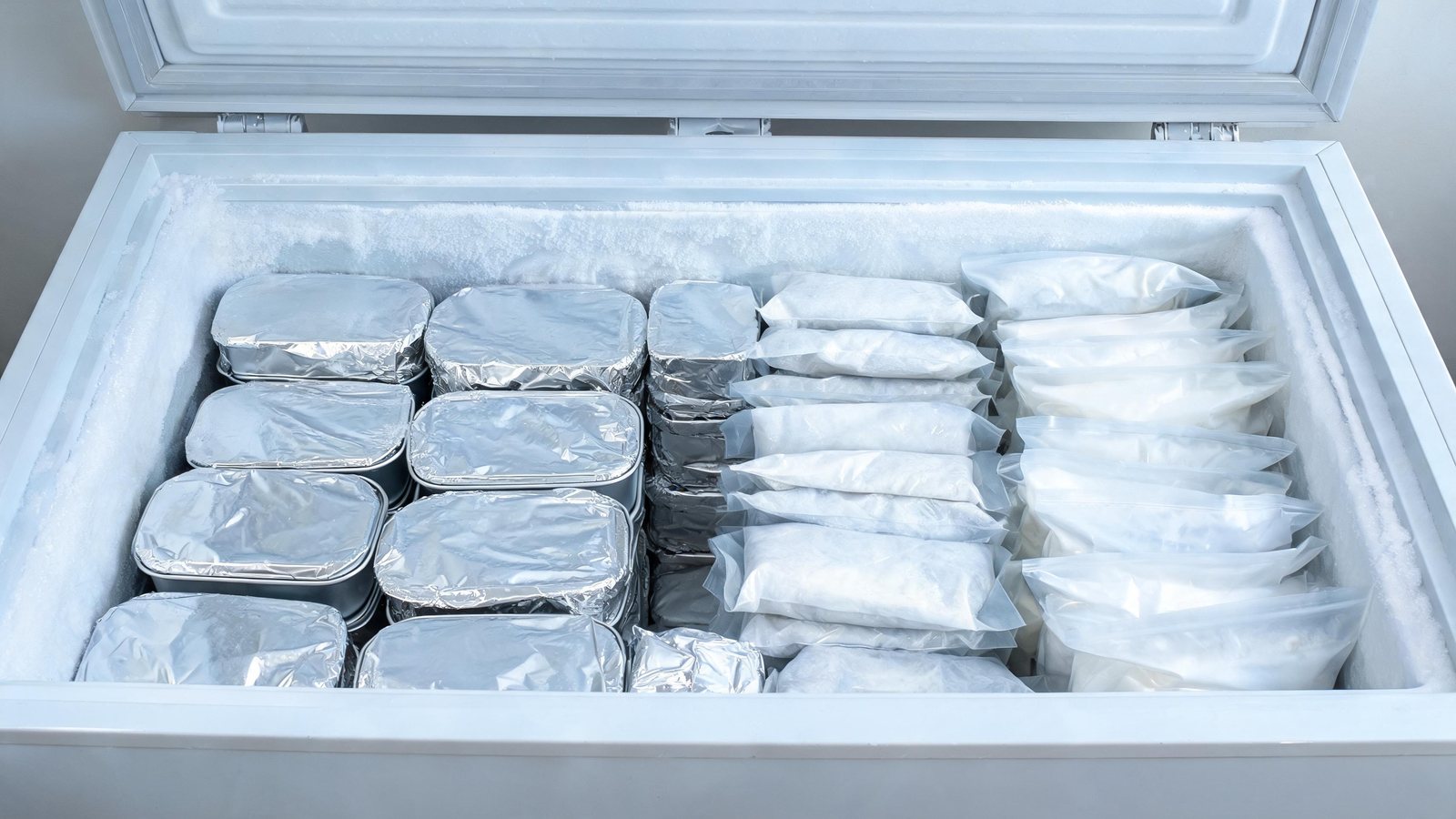
Soups and stews, casseroles, cooked meat, and cooked poultry are the family dinners that freeze well. On the USDA freezing chart, at 0°F, those quality windows are 2 to 3 months for soups and stews, 2 to 3 months for casseroles, 2 to 3 months for cooked meat, and 4 months for cooked poultry. Food held at 0°F stays safe indefinitely; the months are quality, which that chart states in a note. Mayonnaise, cream sauce, and lettuce freeze poorly, on the USDA freezing page. Thaw in the refrigerator, in cold water, or in the microwave, the three paths on the USDA thaw page. Reheat a cooked freezer meal to 165°F.
Which family dinners freeze well
A freezer meal is a dinner you assemble or cook now and eat on a later night. The types with a published quality window are the ones to build the week around. People also ask for a list of 10 freezer meals. The charts name types and quality months, so a practical set is soup, chili, a meat sauce, a casserole, cooked poultry, a broth stew, cooked beans, a tomato pasta bake, gravy, and an entree you packed yourself.
| Dinner type | Quality at 0°F | Source row |
|---|---|---|
| Soups and stews | 2 to 3 months | USDA freezing chart |
| Casseroles | 2 to 3 months | USDA freezing chart |
| Cooked meat | 2 to 3 months | USDA freezing chart |
| Cooked poultry | 4 months | USDA freezing chart |
| Gravy, meat or poultry | 2 to 3 months | USDA freezing chart |
| Frozen dinners and entrees | 3 to 4 months | USDA freezing chart |
| Ham, hot dogs, and lunchmeats | 1 to 2 months | USDA freezing chart |
| Cooked meat or poultry leftovers | 2 to 6 months | FoodSafety.gov leftover row |
Chili, a meat sauce, cooked beans in a broth, and a baked pasta in a tomato sauce sit with soups, stews, or casseroles. Cooked chicken or turkey for later enchiladas or noodles follows the cooked poultry row, 4 months on the USDA chart. The FoodSafety.gov leftover row groups cooked meat and cooked poultry together at 2 to 6 months. Those two charts disagree on the width of the window. Use the USDA row for the food you packed, and treat the wider 2 to 6 month line as the FoodSafety.gov leftover statement, not as a longer safety date. Both pages say freezer time at 0°F is a quality mark. Food stored continuously at that temperature can be kept indefinitely.
Raw roasts, steaks, and chops are listed at 4 to 12 months on the same USDA chart, longer than cooked meat at 2 to 3 months. That matches the freezing page's point that raw meat and poultry keep quality longer than cooked meat, because cooking drives off moisture. A raw freezer bag is a different job from a cooked casserole: thaw it, then cook it. A cooked casserole is reheated.
Which dinners freeze poorly
The USDA freezing page names mayonnaise, cream sauce, and lettuce as foods that freeze poorly. Emulsions such as mayonnaise or cream separate and look curdled after thawing, which that page describes under slow freezing. A cream-based soup is the weak case. A broth soup, chili, or tomato sauce is the strong case. A salad made with mayonnaise, or a lettuce side, belongs in the fridge for the night you eat it, not in the freezer bag.
The Cold Food Storage Chart marks egg, chicken, ham, tuna, and macaroni salads as freezing poorly, and it marks hard-cooked eggs the same way. Those are fridge foods. The fridge times for them are on how long leftovers are good for.
Most vegetables that freeze well are low acid and need a short blanch before they go into the freezer, on the USDA freezing page. A cooked vegetable already in a soup or casserole rides with that dish. A head of lettuce is one of the freeze-poor examples on the USDA freezing page. That page reserves blanching for low-acid vegetables that freeze well.
How to pack and freeze a dinner
Cool a just-cooked pot by dividing it into shallow containers and getting it to refrigerator temperature, which the USDA leftovers page describes, then move the chilled food to the freezer. Pack it so air stays out. The USDA freezing page says proper packaging helps maintain quality and prevent freezer burn, and that a torn package can be overwrapped and still used. Original store wrap is permeable to air, so overwrap it for a long stay. Vacuum packages can go in unopened. Rinsing meat or poultry first is unnecessary, on that page.
Spread packages in one layer until they are frozen solid, then stack them. A food 2 inches thick should freeze in about 2 hours, which is the pace that page calls ideal. Write the food name and the date on the package so the quality month has a start. A freezer that cannot hold 0°F is a short-stay compartment, not the place for the 2 to 3 month rows. Keep an appliance thermometer in the freezer and check it.
Three thaw paths, and cooking from frozen
The USDA thaw page names three safe ways to thaw food: in the refrigerator, in cold water, and in the microwave. Counter thawing and hot-water thawing sit outside those three. The outer layer can warm past 40°F while the center is still frozen, which that page calls the danger zone between 40°F and 140°F.
Refrigerator thawing takes the longest and keeps the food at 40°F or below the whole time. A large item such as a turkey needs at least 24 hours for every 5 pounds. A pound of ground meat or boneless chicken breasts needs a full day. After a refrigerator thaw, ground meat, stew meat, poultry, and seafood stay at good quality for an additional day or two before cooking. Red meat cuts, such as roasts, chops, and steaks, are listed at 3 to 5 days. Food thawed in the refrigerator can be refrozen, with some loss of quality.
Cold-water thawing is faster and needs attention. The food stays in a leak-proof bag, submerged in cold tap water, and the water is changed every 30 minutes. A package of about a pound may thaw in an hour or less. A 3- to 4-pound package may take 2 to 3 hours. For a whole turkey, estimate about 30 minutes per pound. If the food thaws completely in cold water, cook it immediately. Foods thawed this way are cooked before any refreeze.
Microwave thawing finishes sooner than the refrigerator path or the cold-water path. Cook immediately after, because some areas warm during the thaw. Foods thawed in the microwave are cooked before any refreeze.
When the night is too short for a thaw, cooking from frozen is allowed. The thaw page says cooking takes approximately 50% longer than the time for thawed meat and poultry. The freezing page says raw or cooked meat, poultry, or casseroles take approximately one and a half times as long from frozen. Those two statements are the same pace, named on two pages. Discard absorbent pads from meat or poultry before that cook. A cooked freezer meal, once hot, is reheated to 165°F if you are reheating rather than cooking raw food for the first time. Sauces, soups, and gravies get a rolling boil, on the leftovers page.
A slow cooker is not one of the three thaw paths. The thaw-first rule for that pot is in slow cooker meal prep.
Quality months, named by chart
Use the row that matches what you packed, and date the package. A soup packed in March is still in its 2 to 3 month quality window in April and May. Past that window, the food held at 0°F is still in the indefinite-safety statement, and the quality may have slipped. The freezing page says to check odor after a long freeze and to discard food with a rancid smell. Heavily freezer-burned spots can be cut away. The USDA freezing page says freezer burn dries food in spots and leaves the food safe to use. Gray-brown leathery spots are the sign it names.
If a food is missing from the chart, the freezing page says to judge quality after thawing, starting with odor. That is a quality check, not a new safety date.
Fridge time and freezer time are different clocks. A cooked dinner that has already spent days in the refrigerator should be frozen while it is still inside the fridge window, then thawed and used with the leftover rules. Those fridge rows are collected in how long leftovers are good for.
What the recipe roundups leave to the charts
The top results for this search are a video, a recipe collection, and a recipe roundup. The video at rank 1 did not return a readable page, so it is not a source here. The NYT Cooking collection is a list of freezer-friendly recipes, including enchiladas, chili, burritos, and soups, with cook times on the cards. The NYT Cooking collection omits thaw steps and a freezer quality-month table. The Erin Lives Whole roundup is a long list of breakfast and dinner recipes and says most freezer meals keep for around 5 to 6 months if packaged well. That 5 to 6 month line is longer than the USDA rows for soups and casseroles, both 2 to 3 months. The Erin Lives Whole page omits a 165°F reheat and a freeze-poor list such as mayonnaise.
A recipe list is useful once you know which types belong in the freezer. The quality months and the thaw paths are the part a recipe list leaves for the charts. A session order for packing several dinners in one afternoon is in freezer meal prep. A first week of cooking ahead, fridge and freezer together, is in how to meal prep.
A printed set of ten freezer dinners
When the types are clear, the remaining job is the shopping list, the labels, and the order of work.
The Prep-Ahead Freezer Dinner Kit is a print-only PDF for making and freezing ten family dinners in two prep sessions, then thawing and cooking them on busy nights. Inside are a freezer basics page with sourced temperatures and storage times, a freezer label sheet, and a freezer inventory page. The Prep-Ahead Freezer Dinner Kit comes as one ZIP of US Letter and A4 PDFs, 23 pages. The Prep-Ahead Freezer Dinner Kit is $8.00.
Freezer times on the Prep-Ahead Freezer Dinner Kit are quality guidance from a university extension chart, and that guidance is not a safety limit for these exact recipes. The months in the table above come from the USDA freezing chart and the FoodSafety.gov leftover row, not from the kit.
The chart months are general quality guidance. They are not a lab result for the casserole in your freezer, and a freezer warmer than 0°F is outside the condition those rows assume.
Questions
What meals freeze well for meal prep?
Soups and stews, casseroles, cooked meat, and cooked poultry are the dinner types with quality months on the USDA freezing chart. Broth soups and meat sauces belong in that group. Cream sauces and mayonnaise-style dressings are the freeze-poor cases on that page.
What foods shouldn't you freeze?
The USDA freezing page names mayonnaise, cream sauce, and lettuce as foods that freeze poorly. The Cold Food Storage Chart marks egg, chicken, ham, tuna, and macaroni salads, and hard-cooked eggs, the same way.
What freezer meals should I make for the week?
Start with soup, chili, a meat sauce, a casserole, and cooked poultry, then use the quality months on the USDA freezing chart for those types.