How to Meal Prep Dinners for the Week
Published 2026-10-16 · Updated 2026-10-16
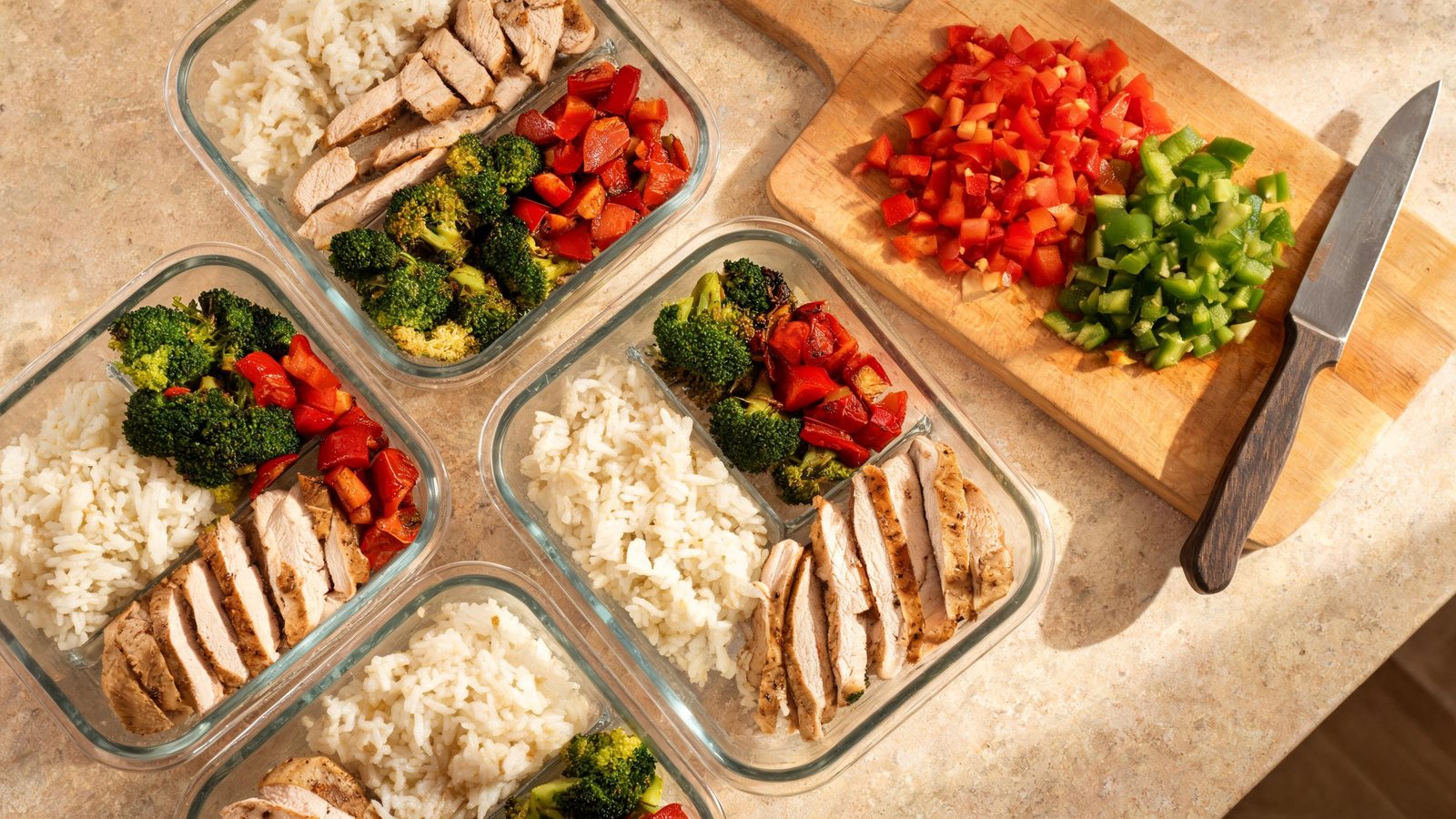
A first meal-prep session for family dinners is one cook day, a fridge group, and a freezer group. On the FoodSafety.gov chart, cooked meat or poultry keeps 3 to 4 days in the refrigerator and 2 to 6 months in the freezer for quality. Get the food into the refrigerator within 2 hours of cooking. Reheat a cooked portion to 165°F. Portions for nights past the fridge window go into the freezer on the cook day, not at the back of the fridge.
A first Sunday, in order
Pick the week's dinners before you shop. Mark each night as a fridge night or a freezer night. Fridge nights are the ones you will eat inside the 3 to 4 day cooked-leftover row. Freezer nights are the rest. A household that eats dinner at home five nights can put the first nights in the fridge and the later nights in the freezer from the same cook.
Write one grocery list from those dinners, grouped the way you walk the store. A blank list page is a different job from the cook; grocery list is the place for the aisle order. Shop that list once.
Cook the dinners. Divide large pots into shallow containers so they cool, which the USDA leftovers page asks for, and refrigerate them within 2 hours. The limit is 1 hour if the room is over 90°F. Hot food can go into the refrigerator directly.
Label every container with the food and the date you refrigerated or froze it. Fridge labels also get the night you plan to eat them, so the 3 to 4 day row is a date on the lid, not a guess on Thursday.
Freeze the later portions the same day. Spread packages in one layer until they are frozen solid. A food about 2 inches thick should freeze in about 2 hours, on the USDA freezing page. Stack them after they are solid. The dinners for that freezer group, and the freeze-poor types, are sorted in freezer meals.
On a freezer night, thaw in the refrigerator. The USDA thaw page names that path, plus cold water and the microwave, and puts counter thawing outside those three. Reheat the cooked food to 165°F. A raw freezer bag is cooked after thawing, not merely reheated.
The fridge clock and a second cook
Cooked leftovers on the chart keep 3 to 4 days refrigerated. A Sunday cook eaten through the early week sits in that row if you count from the day you refrigerated the food. The chart leaves the start-day count unstated, so write the date and stay inside a window you can see.
A plan that holds every cooked portion in the fridge for 7 days runs past that row. Two ways stay inside it. Freeze the later portions on Sunday. Or cook a second time when the first window ends, and start a new 3 to 4 day clock. That is the frequency the chart supports. It is not a fitness schedule and it is not a promise about how long the cooking will take.
People ask whether Sunday can cover the whole week. The menu can be chosen on Sunday. The fridge cannot hold cooked meat or poultry for all seven nights under the chart row. The freezer can hold the later nights, at 0°F, with quality months that depend on the food. Those months, and the foods that freeze poorly, are on the freezing page and in the freezer-meals guide.
What goes in the fridge, what goes in the freezer
Fridge group, eaten inside 3 to 4 days: cooked chicken or turkey, a meat sauce, soup, a casserole, pizza. The USDA leftovers page keeps leftovers in the refrigerator for 3 to 4 days, and the FoodSafety.gov chart gives the same window for its cooked meat or poultry, soup and pizza rows. Hard-cooked eggs are listed at 1 week, so a boiled-egg side can outlast the chicken. Deli slices sit on a 3 to 5 day fridge row of their own. Those longer rows are specific foods, not a reason to stretch a pan of cooked chicken.
Freezer group: broth soups and stews, casseroles, cooked meat, cooked poultry. The USDA freezing chart lists soups and stews at 2 to 3 months, casseroles at 2 to 3 months, cooked meat at 2 to 3 months, and cooked poultry at 4 months, for quality at 0°F. The FoodSafety.gov leftover row lists cooked meat or poultry at 2 to 6 months. Use the row that matches what you packed. Both pages treat those months as quality, and food held at 0°F can be kept indefinitely.
Leave cream sauces, mayonnaise, and lettuce out of the freezer group. The USDA freezing page names those as foods that freeze poorly. A mayo salad is a fridge food for the night you will eat it. Egg, chicken, ham, tuna, and macaroni salads are marked as freezing poorly on the FoodSafety.gov chart.
A low-effort first Sunday is one soup, one meat sauce, and one casserole. That covers fridge nights and freezer nights from three pots. Which dinners to put on the list is in meal prep dinner ideas. A written menu for the week, before the cook, is in how to make a meal plan.
The 3-3-3 label, against the chart
Searchers ask about a 3-3-3 rule for meal prep. Neither the FoodSafety.gov chart nor the USDA leftovers page uses that label. The figures those pages do state are a 3 to 4 day refrigerator window for cooked leftovers, a 2-hour limit to get food into the refrigerator, and a reheat to 165°F. Build the first session on those figures. A mnemonic that is not on the page is not a storage time.
Downsides of a prep day
The fridge window is the real constraint. A beautiful Sunday cook still has to be eaten or frozen inside the chart row. Seven fridge days are past that row for cooked meat or poultry. Freezer months are a quality mark for food held at 0°F, and a freezer warmer than that is outside the condition the rows assume. The chart is a general home guideline. It leaves your own fridge unmeasured.
A second downside is choosing freezer foods that freeze poorly. A week of mayo salads and cream soups will disappoint on Thursday night even if the bags were labeled. Pick the types with a quality month, and keep the salad for a fridge night.
A third downside is treating a recipe roundup as the session. The top results for "meal prep" are videos (titles in the search results: a steps video, a one-pan week, and a work-lunch prep). They were not readable as pages here, so they are not sources. A written page in that neighborhood, the Swiftfit meal-prep list, is a long set of work-lunch recipes. The Swiftfit meal-prep list omits a 3 to 4 day fridge window and a 165°F reheat. Use a list like that for dish ideas after the clock is clear, not instead of it.
When the freezer half needs a printed session
Once the split is clear, the freezer half is a shopping list, labels, and an order of work.
The Prep-Ahead Freezer Dinner Kit is a print-only PDF that walks through two prep sessions and ten family dinners, with a freezer basics page, a freezer label sheet, and a freezer inventory page. US Letter and A4 files for the Prep-Ahead Freezer Dinner Kit are one ZIP, 23 pages. The Prep-Ahead Freezer Dinner Kit is $8.00.
Freezer times printed in the Prep-Ahead Freezer Dinner Kit are quality guidance from a university extension chart, not a safety limit for these exact recipes. The 3 to 4 day fridge row and the 2 to 6 month leftover row on this page come from the FoodSafety.gov chart.
A session order for several freezer dinners in one afternoon is in freezer meal prep. Fridge times for the portions you did not freeze are in how long leftovers are good for.
Questions
How often should you meal prep?
Cooked leftovers on the Cold Food Storage Chart keep 3 to 4 days in the refrigerator. A Sunday cook covers that window. Later nights need a freezer portion from the same day, or a second cook when the window ends.
Can I meal prep for the whole week on Sunday?
You can plan all seven dinners on Sunday. Cooked portions kept in the fridge past 3 to 4 days are outside that row. Freeze the Thursday-through-weekend portions on Sunday, or cook again midweek.
What is the 3-3-3 rule for meal prep?
Neither the FoodSafety.gov chart nor the USDA leftovers page uses a 3-3-3 label. Those pages state a 3 to 4 day fridge window, a 2-hour cooling limit, and a reheat to 165°F.
What are some lazy meal prep ideas?
A broth soup, a tomato meat sauce, and a baked casserole are low-effort family dinners that also have freezer quality months on the USDA freezing chart. Cream sauces and mayonnaise salads are the weak freezer cases.
How to start meal prepping for beginners?
Pick five dinners, shop once, cook once, chill within 2 hours, and split the food into a 3 to 4 day fridge group and a freezer group. Label both with the food and the date.
What are the downsides of meal prep?
The fridge window is short. Seven fridge days run past the cooked-leftover row on the Cold Food Storage Chart. Freezer months are a quality mark for food held at 0°F. The chart is a general row, not a reading of your fridge.